
 Tiếng Việt
Knowing how to visit a Vietnamese family home respectfully can make a local experience in Ninh Binh feel warmer, easier and more meaningful. Many travelers join a family dinner, farmhouse cooking class or village visit because they want real connection, not just sightseeing. The good news is that Vietnamese hosts are usually generous and forgiving when guests are sincere. Still, a few simple habits matter: greet people properly, notice where shoes go, respect the ancestor altar, wait before sitting or eating, ask before taking photos, and treat the home as a private family space rather than a tourist attraction.
Quick Answer
To visit a Vietnamese family home respectfully, follow your host’s lead. Greet elders first, remove shoes if others do, avoid touching the family altar, bring a small gift if appropriate, wait to be invited to sit or eat, and ask before taking photos. During meals, try a little of what is offered, say thank you, and be honest but kind about allergies, alcohol or foods you cannot eat.
Why home etiquette matters in Vietnam
In Vietnam, the home is not only a place to sleep and eat. It is often where several generations meet, where family meals happen, where guests are welcomed, and where ancestors are remembered. In many homes, especially outside big cities, you may see a family altar with photos, incense, flowers, fruit or offerings. This is a meaningful part of domestic life, not a decoration.
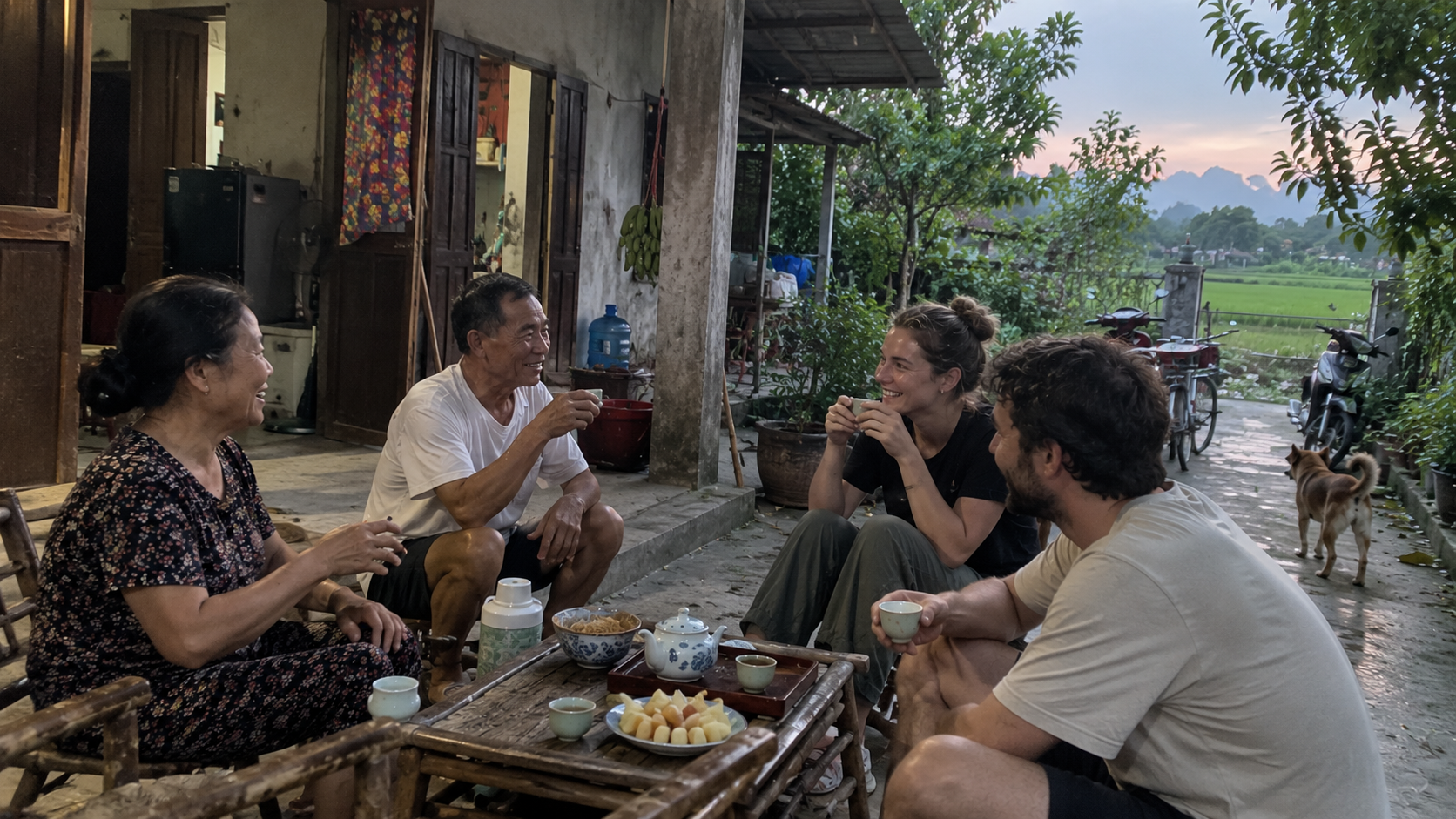
For travelers in Ninh Binh, visiting a family home can be part of a Ninh Binh family dinner, a cooking class, a village visit or a private countryside experience. These moments are special because they are personal. You are not walking into a restaurant designed only for tourists. You are entering someone’s living space, often with children, grandparents, neighbors or relatives nearby.
The best approach is simple: be observant, modest and grateful. Vietnamese families do not expect foreign guests to know every custom. They do appreciate guests who slow down, listen, and avoid acting as if every corner of the home exists for photos.
Start with the greeting
When you arrive, greet the host warmly and calmly. A smile, a slight nod and a simple hello go a long way. If you know basic Vietnamese, use it. Xin chao means hello. Cam on means thank you. If you are meeting older people, let your guide help with the proper greeting because Vietnamese pronouns change depending on age and relationship.
In many homes, elders are greeted first. This does not need to feel formal or intimidating. It is simply a way of showing respect. If someone offers a handshake, shake hands gently. If they do not, do not force it. In more traditional settings, a nod and smile may be enough.
If you are visiting with a guide, allow the guide to introduce you and explain who everyone is. This helps avoid confusion and gives the family a clear reason for your visit. If you are visiting alone, keep introductions simple: your name, where you are from, and a sincere thank you for welcoming you.
Notice the shoes at the door
One of the easiest etiquette cues is shoes. In many Vietnamese homes, guests remove shoes before entering the main living area. Sometimes you leave shoes outside the door. Sometimes there are house slippers. Sometimes the floor is practical and the host may wave you in with shoes on. The rule is not one-size-fits-all, so look at what the family does.
If you are unsure, pause at the entrance and ask, “Shoes off?” A host or guide will quickly tell you. This tiny pause shows respect. It is better than walking straight in and realizing later that everyone else left their shoes outside.
For countryside visits in Ninh Binh, wear shoes that are easy to remove and put back on. You may move between a yard, kitchen, dining area and garden. Complicated laces or muddy soles make the visit less comfortable for everyone.
Respect the ancestor altar
Many Vietnamese homes have an ancestor altar. It may be high on a wall, in the central room, or in a dedicated area. It often includes incense holders, photos, fruit, flowers or small offerings. Vietnamese ancestor veneration reflects respect for family lineage and the ongoing bond between living family members and those who came before them.
Do not touch, lean on, rearrange or place your belongings near the altar. Do not point your feet toward it when sitting on the floor. Do not make jokes about it. If you want to photograph it, ask first. Some families may be happy to explain the altar; others may prefer privacy.
If your host invites you to light incense or stand quietly near the altar, follow their guidance. You do not need to pretend to share a belief you do not hold. A respectful posture is enough: quiet body language, no loud talking, and appreciation for the family’s trust in sharing this part of the home.
Bring a small gift, but keep it simple
If you are formally invited to a Vietnamese family home, a small gift is thoughtful. Good options include fruit, sweets, tea, coffee, a small item from your home country, or something useful for the family. If the visit is arranged as part of a paid experience, a gift is not always necessary, but it can still be kind when appropriate.
Avoid gifts that feel too expensive or too personal. You do not want to make the host uncomfortable. If you bring food, choose something easy to share and not too fragile. If there are children, ask before giving candy or toys directly to them, especially if parents are nearby.
Offer the gift with both hands if you remember. The family may not open it immediately in front of you. That is normal. Do not pressure them to open it or react in a certain way.
At the table, wait and observe
Vietnamese home meals are often shared family-style. Dishes are placed in the middle, and each person has a bowl of rice or an individual bowl. A typical family meal may include rice, vegetables, soup, tofu, fish, pork, chicken, dipping sauce and seasonal ingredients. In Ninh Binh countryside homes, the exact dishes depend on the host, season and your dietary needs.
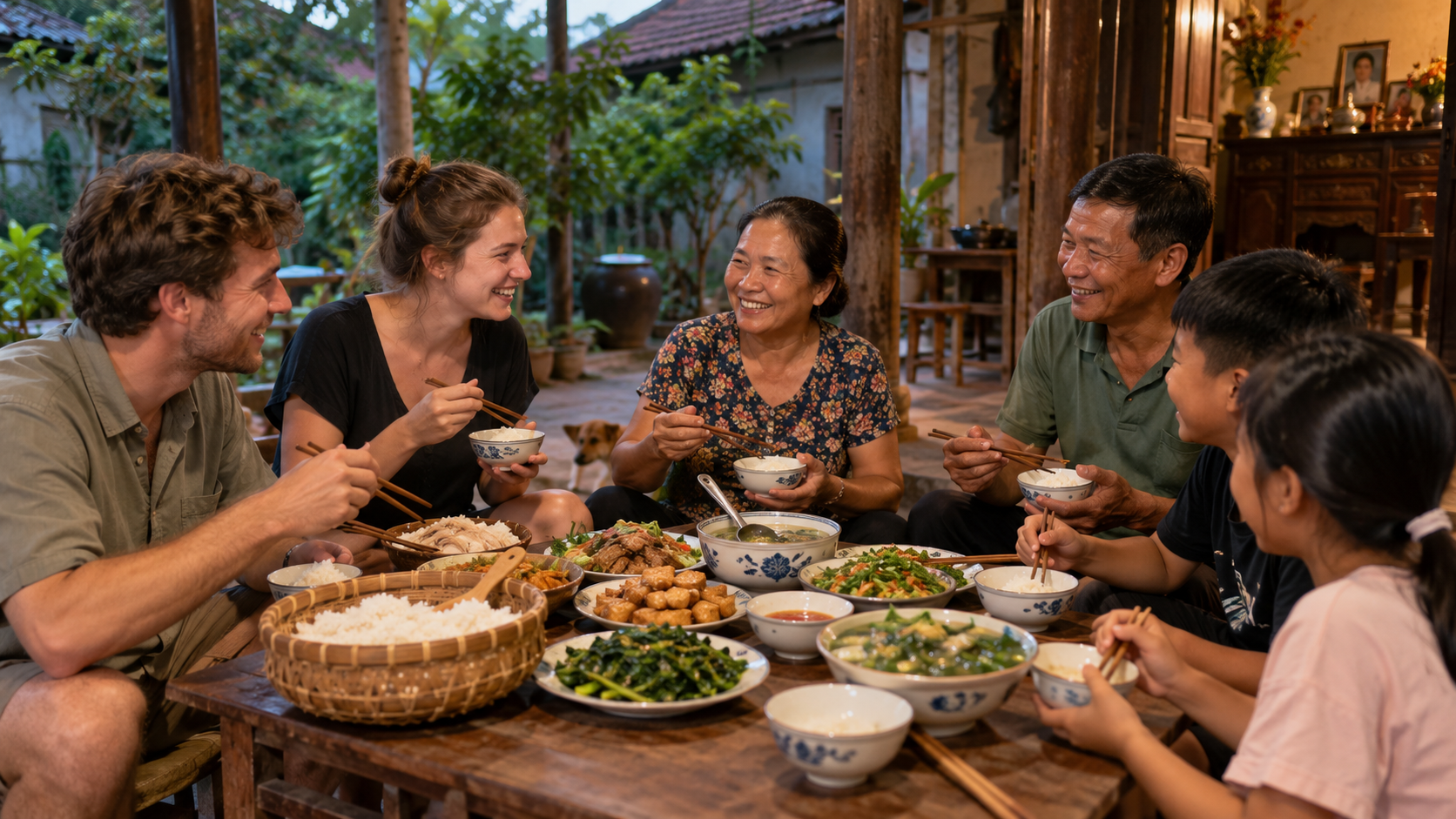
Wait to be shown where to sit. In some homes, seating is casual. In others, elders or hosts have preferred places. If you are not sure, let someone guide you. Before eating, the family may invite everyone to begin. If you know Vietnamese, moi ca nha an com is a polite phrase that means you invite the family to eat, but pronunciation can be tricky, so use it only if you feel comfortable.
Try a little of what is offered if you can. You do not need to eat everything, and you should not ignore allergies, vegetarian needs or medical restrictions. Be clear early. If you cannot eat something, smile and explain simply: “I am allergic,” “I do not eat meat,” or “Just a little, thank you.”
Handle alcohol and food pressure gently
In some Vietnamese homes, especially during dinner, you may be offered rice wine, beer or a toast. It is okay to decline alcohol. You can put a hand over your glass, smile and say no thank you. If a guide is present, ask them to explain politely. Health, medication, driving, religion or personal preference are all valid reasons.
Food may also be offered more than once. This usually comes from hospitality, not pressure. Hosts want guests to feel cared for. If you are full, place your hand lightly over your bowl, smile and say thank you. Complimenting the meal helps: “Very good” or ngon if you know the word.
If the host places food into your bowl, receive it graciously unless you truly cannot eat it. If you cannot, explain kindly rather than pushing it away dramatically. The goal is to protect your needs while protecting the host’s dignity.
Ask before taking photos
A family home is not a public attraction. Always ask before photographing people, children, kitchens, bedrooms, altars or private corners of the house. This is especially important in rural areas where hospitality can make guests feel welcome, but privacy still matters.

If people agree to photos, take a few and then put the camera away. Do not spend the whole meal filming. Do not photograph children without a parent’s permission. Do not post someone’s home or family online in a way that feels exposing or mocking.
A good habit is to offer to send the photo back through the guide or host. Families often enjoy seeing good photos of themselves, especially when shared respectfully.
Be mindful with children, elders and personal questions
Vietnamese homes can be multi-generational. You may meet grandparents, parents, children, cousins or neighbors. Be warm, but do not touch children on the head, pick them up, or give gifts without checking with an adult. With elders, speak calmly, avoid interrupting, and let your guide help if language becomes difficult.
Travelers often want to ask deep questions about family life, farming, money, marriage or politics. Curiosity is natural, but some questions may feel too direct in a first meeting. Start with gentle topics: food, farming seasons, local festivals, cooking, children studying, or how long the family has lived in the village.
If the family asks you personal questions, remember that this may be normal curiosity rather than rudeness. Questions about age, marriage or children can come up in Vietnam more casually than in some Western cultures. Answer lightly if you want, or smile and move the conversation elsewhere.
Dress and behave like a guest, not a customer
You do not need formal clothing for most countryside home visits, but dress neatly and modestly. Comfortable travel clothes are fine. Avoid swimwear, very revealing tops or outfits that would feel out of place at a family table. If your home visit is combined with a temple or pagoda, cover shoulders and knees.
Keep your voice moderate. Do not put feet on chairs, point feet toward people, or stretch out as if you are in a hotel lounge. Ask before entering rooms that are not part of the visit. If the kitchen is active, do not block the cook just to take photos.
Most importantly, remember that even a paid local experience is still hosted by real people. A respectful guest does not demand perfection. Rural homes may be simple, kitchens may be busy, children may run through the room, and dinner may not follow restaurant timing. That is part of the experience.
How to say thank you after the visit
Before leaving, thank the host directly. A simple cam on, smile and both hands together around a small gift or goodbye gesture can feel sincere. If you ate in the home, compliment the meal. If a guide translated for you, ask them to pass on a specific thank you: “Thank you for welcoming us into your home” is better than a generic goodbye.
If you had a meaningful experience, leave a review for the local host or tour provider. Mention what made the visit respectful and personal, not only what you ate. This helps travelers choose experiences that value local families, not just photo opportunities.
If you want to prepare before a countryside home visit, our guide to useful Vietnamese phrases for Ninh Binh travelers can help with greetings, thanks and simple food phrases.
Related Ninh Binh family experiences
If you want to meet local hosts respectfully, start with our full list of Ninh Binh local experiences. For a warm evening around the table, choose a Ninh Binh family dinner. For a hands-on daytime visit, a Trang An farmhouse cooking class is a gentle way to learn through food. If you want language and village context before visiting homes, try learning Vietnamese in a local village.
FAQ
Should I remove my shoes in a Vietnamese home?
Often, yes, but follow the household. Look for shoes near the entrance or ask your host. If everyone has removed shoes, do the same.
What gift should I bring to a Vietnamese family home?
Fruit, sweets, tea, coffee or a small item from your home country are usually safe choices. Keep it simple and offer it politely, preferably with both hands.
Can I photograph a Vietnamese family altar?
Ask first. The altar is a sacred family space, not a decoration. Some hosts may allow photos, while others may prefer privacy.
What if I cannot eat something served at dinner?
Be honest and kind. Explain allergies, vegetarian needs or health limits early. Hosts usually understand, especially when they know before cooking or serving.
Is it rude to refuse rice wine in Vietnam?
No. Refuse gently with a smile and a clear reason if needed. You can still join the toast with tea, water or a small sip only if you are comfortable.
How do I show respect if I do not speak Vietnamese?
Smile, listen, greet elders first, follow your host’s lead, say thank you, and avoid treating the home like a photo set. Respect is more about behavior than perfect language.