
 Tiếng Việt
Knowing what to wear for a Ninh Binh countryside tour can make the difference between a comfortable local day and a sweaty, muddy, awkward one. Ninh Binh experiences often combine several settings: rice-field lanes, open-air boat rides, village roads, family homes, cooking classes, pagodas and sometimes short climbs or uneven paths. This guide helps you pack and dress for real countryside conditions around Tam Coc, Trang An and Hoa Lu, with practical advice for heat, rain, cycling, boat trips and temple etiquette.
Quick Answer
Wear lightweight, breathable clothes that cover your shoulders and knees when needed, comfortable shoes with grip, a hat, sunglasses and sun protection. For cycling or e-bike tours, choose quick-dry tops and flexible shorts or trousers that are not too loose near the chain. From May to October, bring a light rain jacket or poncho; from November to February, add a thin warm layer for mornings and evenings. If your countryside tour includes temples or pagodas, avoid short shorts, crop tops and sleeveless shirts.
| Item | Best choice | Why it matters |
|---|---|---|
| Top | Light breathable shirt or T-shirt | Comfort in humidity and sun |
| Bottoms | Flexible shorts, light trousers or knee-covering skirt | Works for bikes, boats and temples |
| Shoes | Sneakers or sandals with good grip | Uneven lanes, boat steps, wet paths |
| Rain | Compact poncho or light rain jacket | Useful from May to October |
| Sun | Hat, sunglasses, sunscreen | Open boats and rice fields have limited shade |
| Temple layer | Scarf, sarong or light overshirt | Covers shoulders and knees respectfully |
Dress for the activity, not just the photo
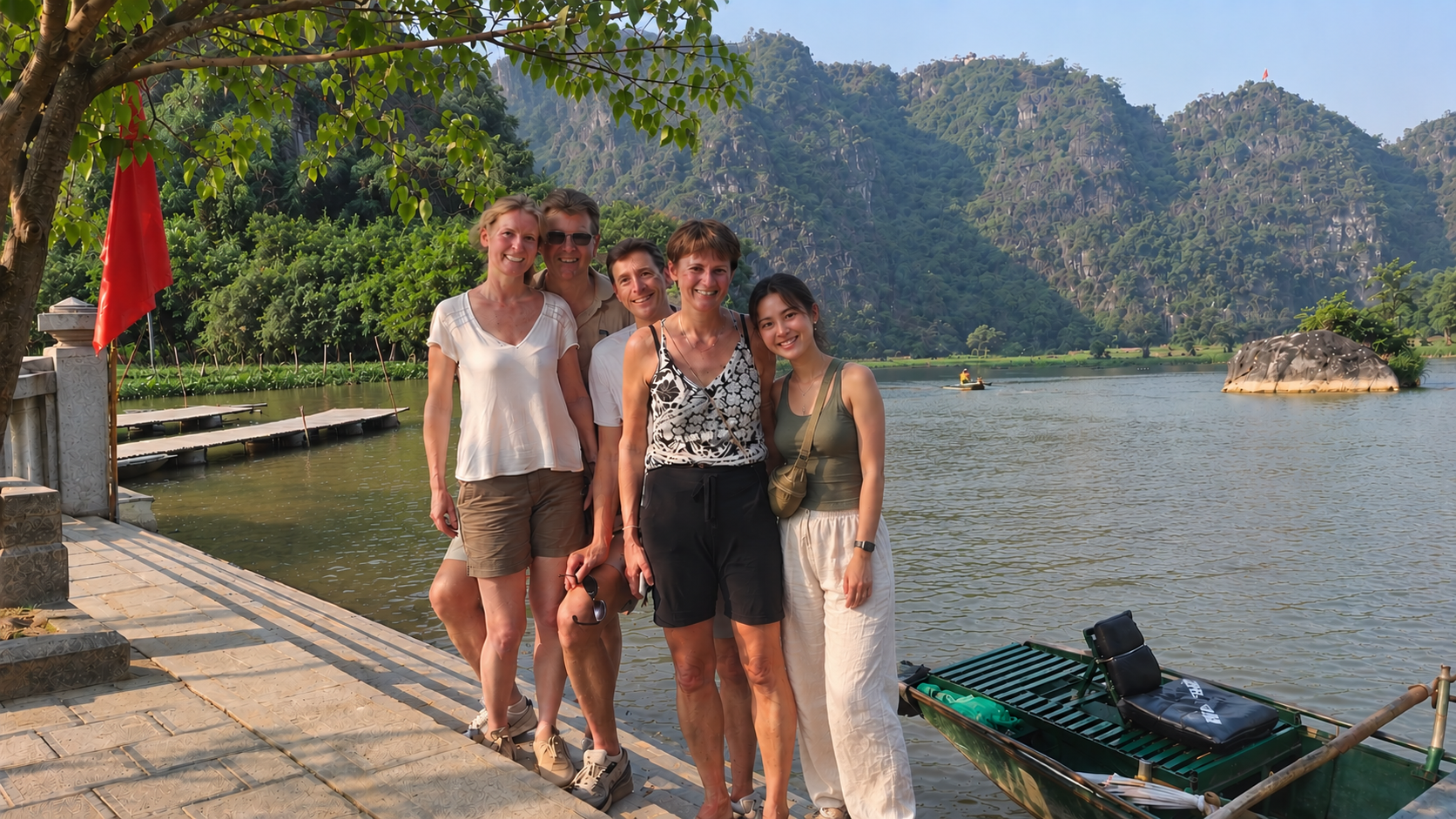
Ninh Binh looks relaxed in photos, but a countryside tour can include more movement than travelers expect. You may step in and out of a small boat, ride a bicycle through village lanes, walk across dusty paths, sit on a low stool for a family meal, visit a pagoda, or get caught in a sudden shower. A beautiful outfit that only works for one viewpoint is not always useful for a full local day.
Vietnam’s official tourism site recommends March to May and September to November as comfortable times for Ninh Binh, while July and August can bring random downpours and stormy moments. It also highlights Tam Coc and Trang An sampan rides, Hang Mua steps, Hoa Lu history, Van Long nature and Bai Dinh Temple. That mix explains why clothing needs to be versatile: cool enough for countryside heat, modest enough for cultural stops, and practical enough for water, mud and bikes.
The best approach is simple: breathable layers, reliable footwear, sun protection and one modest cover-up. This keeps you ready for most countryside experiences without overpacking.
Best clothes for cycling and e-bike tours
For a cycling or e-bike tour around Tam Coc, choose clothes that let you move freely and dry quickly. A lightweight T-shirt, breathable long-sleeve shirt, sports top or linen-blend shirt works well. For bottoms, choose flexible shorts, lightweight trousers, leggings, or a knee-length skirt that will not catch in the bike. Very wide trousers, long flowing dresses and loose scarves can be uncomfortable near wheels or chains.

If you are joining a Tam Coc cycling tour, expect a mix of paved roads, village lanes, field edges and short stops. You do not need technical cycling gear, but you do need comfort. For a Tam Coc e-bike tour, the physical effort is lower, but the same clothing rules apply because you still ride outdoors in sun, wind or light rain.
Bring a small day bag or crossbody bag that sits securely. A loose tote swinging from your shoulder is annoying on a bike. If your tour includes a temple stop, pack a thin shirt or scarf to cover your shoulders rather than cycling the whole day in heavy clothing.
What to wear for boat rides in Tam Coc or Trang An
Boat rides are usually easy on the body, but they expose you to sun, reflection from the water and occasional drizzle. Wear a hat that fits securely, sunglasses and sunscreen. A long-sleeve breathable shirt can be more comfortable than bare shoulders under strong sun. Avoid clothes that become heavy and clingy when wet.
Footwear should be easy to step in and out of safely. You may board from a wet stone edge or low dock, so shoes with grip are better than slippery sandals. If you wear sandals, choose ones with a back strap. Flip-flops can work around a homestay, but they are not ideal for boat steps, muddy paths or cycling.
For photography, neutral or earthy colors look good against rice fields and limestone karsts, but comfort comes first. White outfits can look nice in photos yet show mud, dust and boat marks quickly. If your day includes both a boat ride and countryside lanes, bring a small cloth or wet wipes rather than expecting to stay spotless.
Temple and pagoda dress etiquette
Ninh Binh countryside routes often pass temples and pagodas such as Thai Vi Temple, Bich Dong Pagoda, Hoa Lu temples or Bai Dinh Pagoda. For these places, dress modestly. Cover shoulders and knees, avoid crop tops, very short shorts, sheer clothing and overly revealing outfits. Intrepid’s Vietnam packing guidance also recommends modest clothing that covers shoulders and knees, especially at pagodas and religious sites.
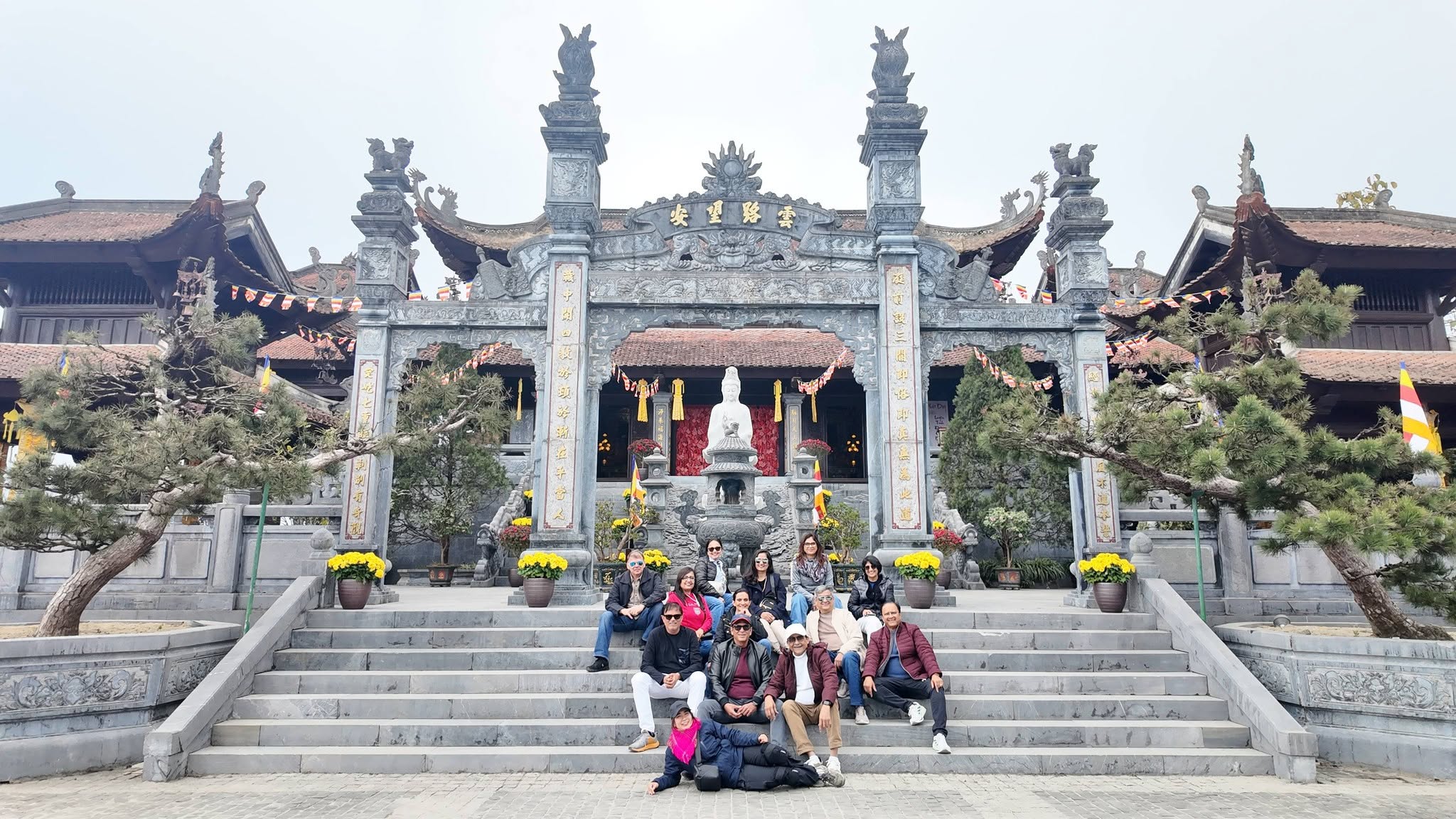
You do not need formal clothing. A lightweight shirt over a tank top, a knee-length skirt, loose trousers, or a sarong can solve most situations. At some worship areas, you may need to remove shoes. This is another reason comfortable slip-on shoes or easy sneakers can be practical.
If you plan to join a Bai Dinh Pagoda night tour, bring a modest layer and consider the evening temperature. Bai Dinh is large, so comfortable walking shoes matter more than stylish footwear.
What to wear by season
Ninh Binh weather changes through the year. You do not need a completely different wardrobe for every season, but small adjustments help a lot.
| Season | What to wear | What to pack |
|---|---|---|
| March to May | Light breathable clothes, sun hat, comfortable shoes | Sunscreen, sunglasses, water bottle |
| June to August | Quick-dry clothes, sandals with grip or breathable sneakers | Rain jacket or poncho, dry bag, insect repellent |
| September to November | Light layers, breathable day clothes | Thin jacket for evenings, rain layer in September |
| December to February | Long trousers, T-shirt plus light jacket or fleece | Warmer layer for early mornings and boat rides |
March to May is often comfortable but can become hot by late spring. June to August is hot, humid and more rain-prone, so quick-dry fabrics are useful. September to November is one of the easiest periods for countryside travel. December to February can feel cool in the morning, especially on open boats or e-bike routes.
Footwear: the most important choice
If you only get one thing right, make it footwear. Ninh Binh countryside surfaces can change quickly: smooth roads, gravel, wet stones, boat docks, mud after rain, temple steps and dusty village paths. Comfortable shoes with grip are better than fashion sandals or new shoes that have not been broken in.
For cycling, breathable sneakers are usually best. For rainy-season travel, walking sandals with a secure strap can be useful because they dry faster than closed shoes. For temple days, choose shoes you can remove easily if needed. For Mua Cave or steep viewpoints, wear real walking shoes, not flip-flops.
If your countryside experience is mostly a jeep ride, family meal or cooking class, footwear can be more relaxed, but it should still handle uneven ground. A Ninh Binh jeep tour may require less walking than cycling, yet you will still step in and out for photos, village stops and short walks.
What to bring in your day bag
Your day bag should be light but prepared. A countryside tour is not the place for a heavy backpack, but you will appreciate small practical items when the weather changes or the road gets dusty.
- Water bottle: Heat and cycling can dehydrate you faster than expected.
- Sunscreen: Reapply after sweating or rain.
- Hat and sunglasses: Useful for boats, fields and open roads.
- Rain layer: A poncho or light jacket is enough for most showers.
- Dry bag or zip pouch: Protects phone, passport copy and camera.
- Small towel or wipes: Helpful after mud, sweat or cooking activities.
- Insect repellent: Useful near water, fields and evening meals.
- Temple cover-up: Thin scarf, sarong or overshirt.
- Cash: Small cafes, markets and family stops may not accept cards.
If your tour includes cooking, farming or a family home, avoid carrying a large bulky backpack into the kitchen or dining space. A small day bag is more comfortable and more respectful in tight local spaces.
What not to wear
A few clothing choices often cause problems in Ninh Binh countryside. Very short shorts, crop tops and sleeveless tops are not ideal if you may visit temples or local homes. Heavy jeans can become hot, restrictive and slow to dry. High heels and smooth-soled sandals are poor choices for village roads, boat steps and pagoda paths. Long flowing skirts or scarves may look good in photos but can be awkward on bikes.
Also avoid packing only bright white clothes if your plan includes cycling or rainy-season travel. Dust, mud and chain marks are part of countryside life. Choose clothes you can actually enjoy the day in.
Outfit ideas for common countryside tours
For a cycling day: quick-dry T-shirt, flexible shorts or light trousers, sneakers, hat, sunglasses and a rain layer in your bag. For a boat plus temple day: breathable shirt, knee-covering bottoms, secure sandals or sneakers, scarf or overshirt, hat and sunscreen. For a cooking or family dinner experience: casual modest clothes, comfortable shoes, and a light layer if returning in the evening.
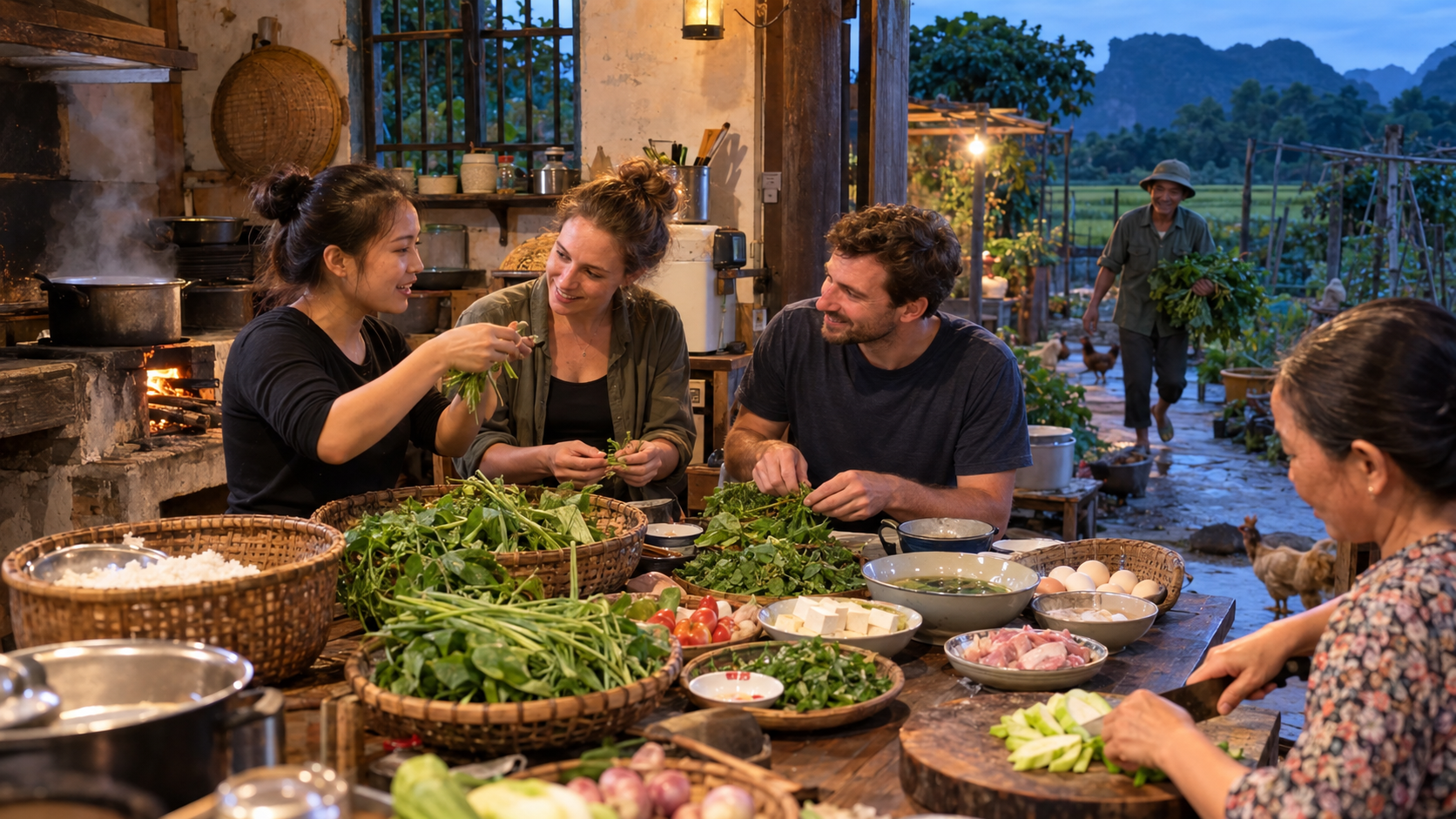
For families with children, pack one spare shirt for each child, especially in hot or rainy months. For older travelers, prioritize shoes with grip, breathable layers and a route that allows rest stops. For photographers, wear clothes that let you crouch, climb in and out of boats, and wait comfortably in changing light.
If you want to compare cycling, e-bike, jeep, food and family-friendly routes before packing, see our guide to Ninh Binh local experiences. For a wider overview, you can also read Best Local Experiences in Ninh Binh.
FAQ
Can I wear shorts in Ninh Binh?
Yes, shorts are fine for cycling, boat rides and casual countryside activities. If your tour includes temples, pagodas or family homes, choose knee-length shorts or bring a sarong or light trousers to cover up.
What shoes are best for a Ninh Binh countryside tour?
Comfortable sneakers or secure walking sandals with good grip are best. Avoid high heels, smooth soles and loose flip-flops, especially for boat steps, wet paths, cycling or pagoda visits.
Do I need temple clothes in Ninh Binh?
If your route includes Bai Dinh Pagoda, Bich Dong Pagoda, Thai Vi Temple or Hoa Lu temples, dress modestly. Cover shoulders and knees, or bring a scarf, sarong or light overshirt.
What should I wear in Ninh Binh during rainy season?
Wear quick-dry clothing, shoes or sandals with grip, and carry a compact poncho or light rain jacket. Protect your phone and camera with a dry bag or zip pouch.
Is it okay to wear a dress for a countryside tour?
Yes, if it is comfortable and not too long or loose for cycling or boat steps. For bike tours, trousers, shorts or leggings are usually easier. For temple visits, a knee-covering dress can work well.
Should I bring a jacket to Ninh Binh?
Bring a light jacket from November to February, especially for mornings, evenings and open-air boat rides. In warmer months, a thin rain jacket or poncho is more useful than a warm layer.