
 Tiếng Việt
The best cooking classes in Ninh Binh are not only about learning recipes. They are a way to slow down, meet a local host, understand countryside ingredients and turn lunch or dinner into part of the trip. Around Trang An, Tam Coc and nearby villages, travelers can choose farmhouse cooking, market-to-table experiences, farm-based meals or a quieter family kitchen dinner. This guide compares the main options so you can choose the right food experience for your time, comfort level, group and appetite for local life.
Quick Answer For most travelers, a farmhouse cooking class is the best all-round choice in Ninh Binh because it combines local food, a countryside setting and hands-on preparation without needing a full-day commitment. A market-to-table class is better if you want to understand ingredients from the beginning. A family kitchen or local dinner is best if you prefer conversation, home-style dishes and a relaxed evening rather than a structured cooking lesson.
| Option | Best for | What to expect |
|---|---|---|
| Farmhouse cooking class | First-time visitors, couples, families | Hands-on cooking in a rural home or farmhouse |
| Market-to-table experience | Food lovers, curious travelers | Market visit, ingredient context and cooking |
| Farm-to-table meal | Slow travelers, nature-focused guests | Garden or farm ingredients, local meal, relaxed pace |
| Family kitchen dinner | Culture seekers, easy evening plans | Home-style food, conversation and local hosting |
Why choose a cooking class in Ninh Binh?
Ninh Binh is usually known for boat rides, limestone mountains and rice fields, but food is one of the easiest ways to understand the countryside. A cooking class gives you time with a local host, not just a restaurant menu. You may see how herbs are washed, how dipping sauce is balanced, or how a family adapts dishes for different spice levels and dietary needs.
It is also a useful break from sightseeing. After a morning at Trang An, Tam Coc, Mua Cave or Bich Dong, a cooking class can slow the day down without feeling like wasted time. You still learn something, eat well and stay connected to local life.
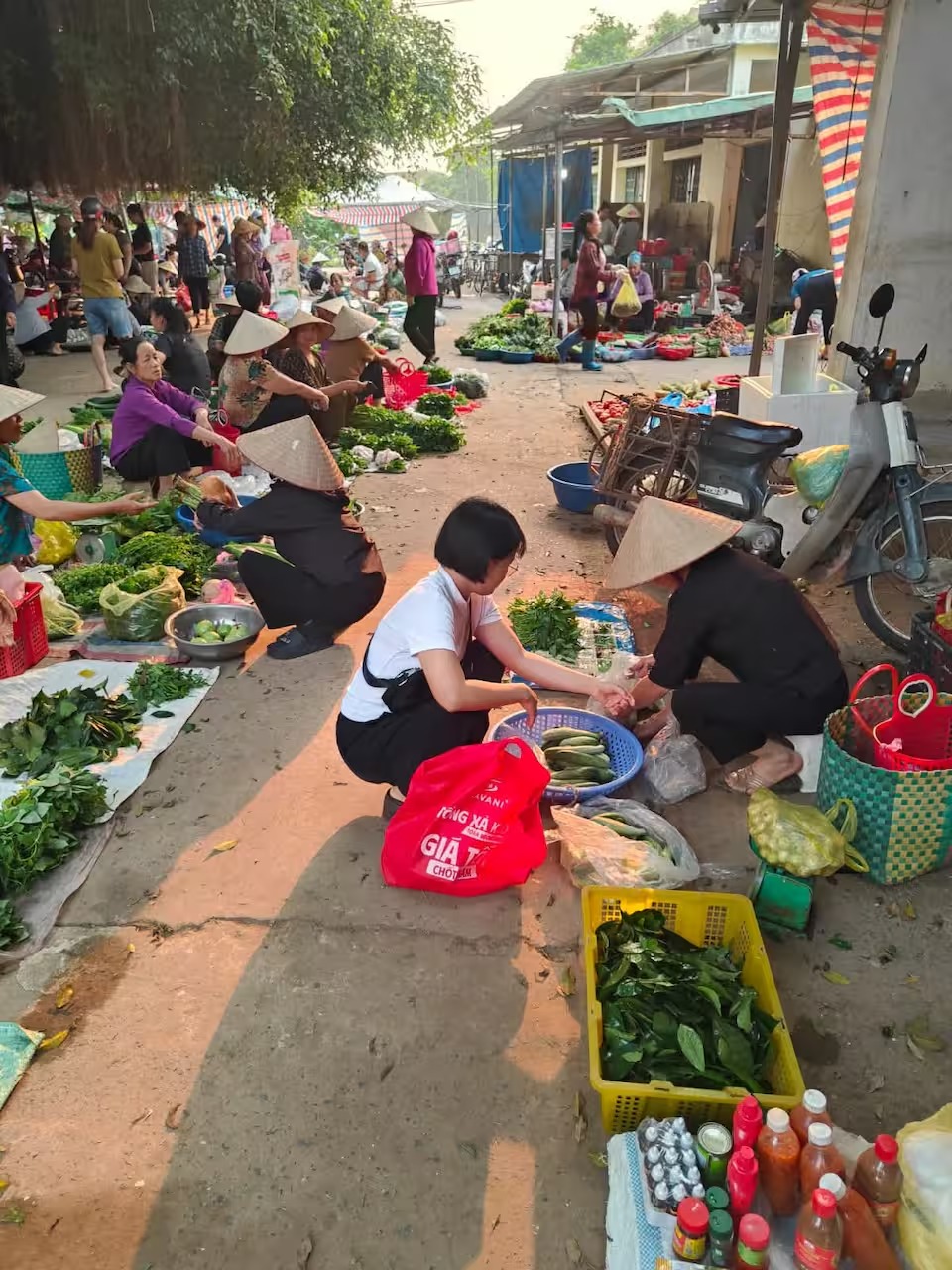
The best choice depends on what you want from the experience. Some travelers want a hands-on lesson with clear steps. Others want to walk through a market and understand what appears in a local kitchen. Families may care more about comfort, timing and whether children can help safely. Vegetarians and guests with allergies need clear communication before booking.
If you are still comparing food, cycling, craft and countryside activities, start with our broader guide to local experiences in Ninh Binh.
Farmhouse cooking class: the best all-round option
A farmhouse cooking class is usually the easiest recommendation for travelers who want a warm, practical and hands-on experience. Instead of learning in a restaurant-style classroom, you cook in a countryside setting with a local host. The atmosphere is usually relaxed, and the dishes are chosen to be approachable for travelers who may not know Vietnamese cooking techniques.
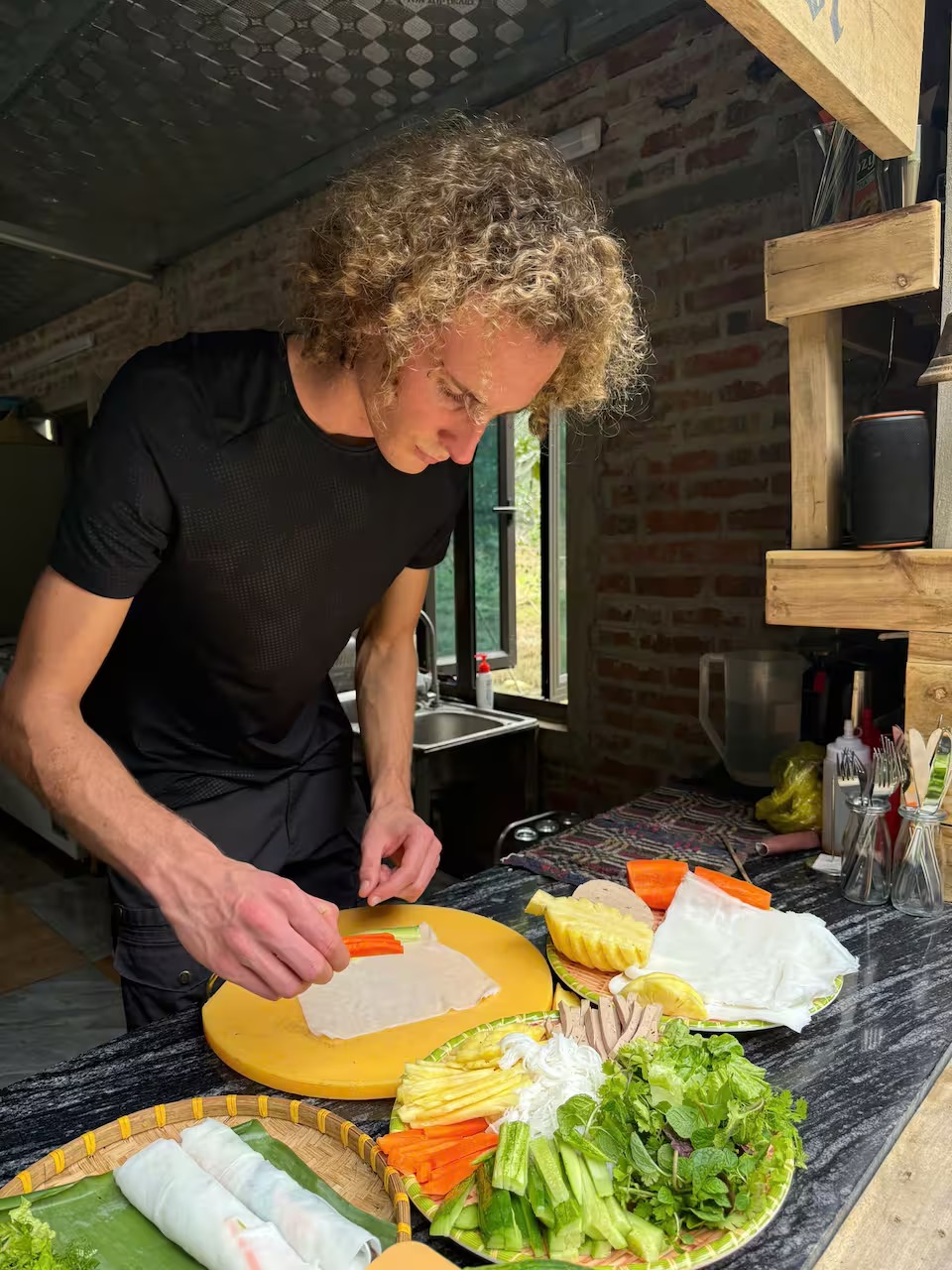
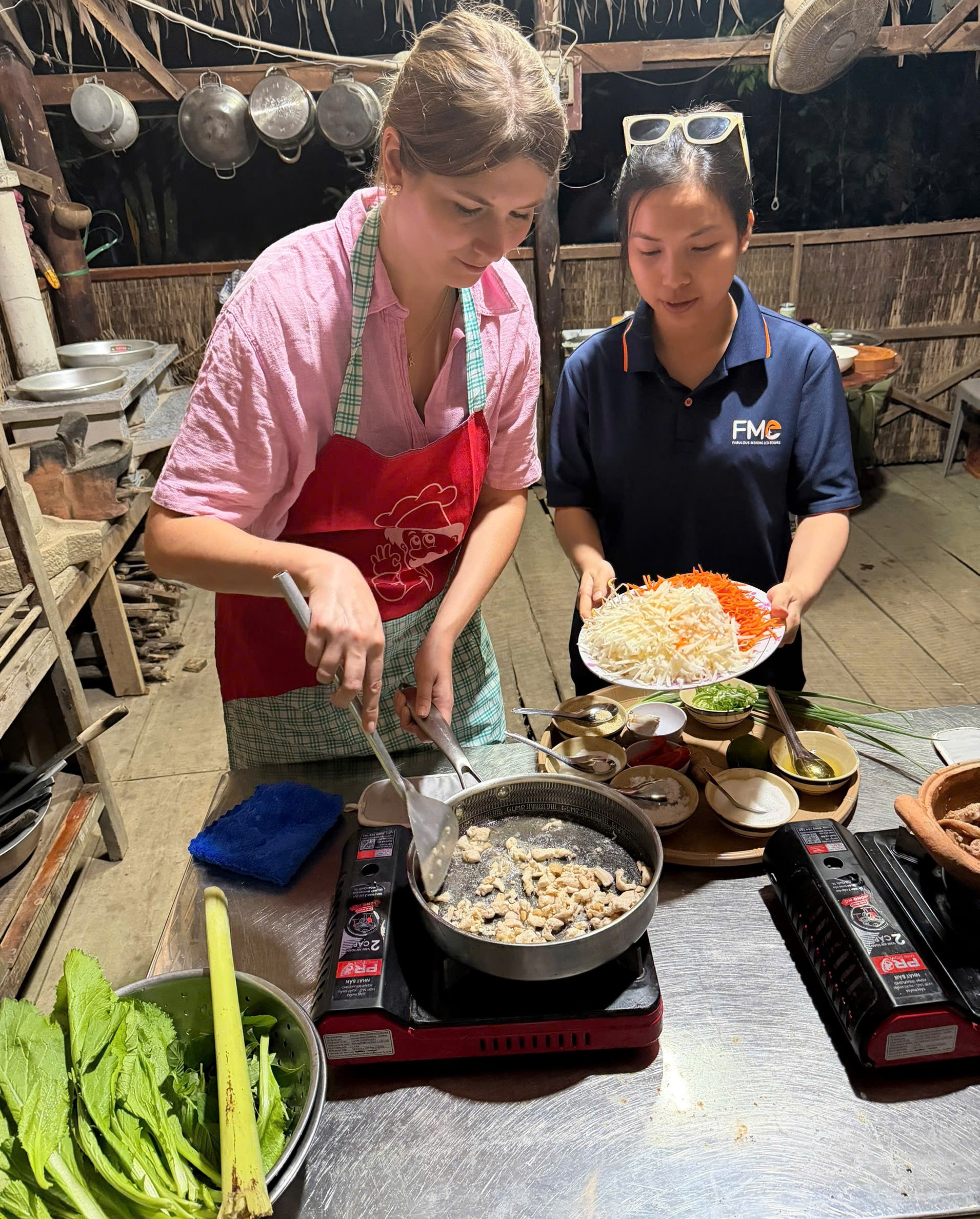
This option works especially well around Trang An and nearby villages, where a farmhouse setting can connect the meal to gardens, rice fields and family life. You may help prepare vegetables, herbs, spring rolls, dipping sauce, grilled or stir-fried dishes, soup, or a local-style meal built around seasonal ingredients. The exact menu can change depending on availability and dietary requests.
The biggest strength is balance. A farmhouse class feels local, but it is usually structured enough that travelers understand what is happening. You can ask questions, cook with guidance and sit down for a meal afterward. It suits couples, solo travelers, private groups and families with children who like hands-on activities.
It may not be the right fit if you want a deep technical cooking lesson with exact measurements and chef-level instruction. Ninh Binh farmhouse cooking is usually more about local home cooking, host interaction and countryside context than professional kitchen training.
For this style, see our Trang An farmhouse cooking class, which combines local hosting, cooking and a countryside family setting.
Market-to-table class: best for ingredient context
A market-to-table experience is best if you enjoy understanding food before it reaches the kitchen. The market visit can show how local hosts choose vegetables, herbs, noodles, tofu, meat, fish, fruit or seasonings for the meal. You learn what is fresh that day and why certain dishes are common in family kitchens.
This option is good for food lovers who want more than a recipe. It connects Vietnamese cooking to daily shopping habits, seasonal produce and household routines.
The tradeoff is that markets are busy, warm and sometimes crowded. Some travelers love that direct local feeling; others may find it intense, especially in hot weather or with young children. Wear comfortable shoes, bring water and be ready for narrow paths and scooters nearby.
Market-to-table experiences can usually support vegetarians if arranged in advance, but do not assume every ingredient or sauce is vegetarian by default. Fish sauce, meat stock and shrimp paste may appear in Vietnamese cooking unless the host knows your needs clearly.
If ingredient stories matter to you, a farm-to-table Ninh Binh experience or market-connected cooking activity is a stronger fit than a simple meal stop.
Farm-to-table meals: best for slow travelers
A farm-to-table experience is slightly different from a classic cooking class. The focus is not always on learning every cooking step. Instead, it is about seeing how local ingredients, gardens and family cooking connect. You may help with simple preparation, walk through a garden or sit down to a meal that reflects what is available nearby.
This is a good choice for slow travelers, couples and guests who want a countryside meal with context but do not need a highly structured lesson. It can also work well after a gentle morning activity.
Farm-to-table experiences are strongest when the host explains the choices behind the meal: what comes from the garden, what is bought locally, what is seasonal, and how dishes are adapted for guests. The value is in the relationship between place, ingredient and family cooking.
The possible downside is that travelers expecting a formal class may find it less instructional. If you want to personally cook several dishes from start to finish, ask before booking how hands-on the experience will be.
This style is also a good fit in rainy season. When cycling or outdoor sightseeing becomes less comfortable, a farmhouse or farm-to-table meal can still give you a meaningful local experience without depending too much on perfect weather.
Family kitchen or local dinner: best for an easy evening
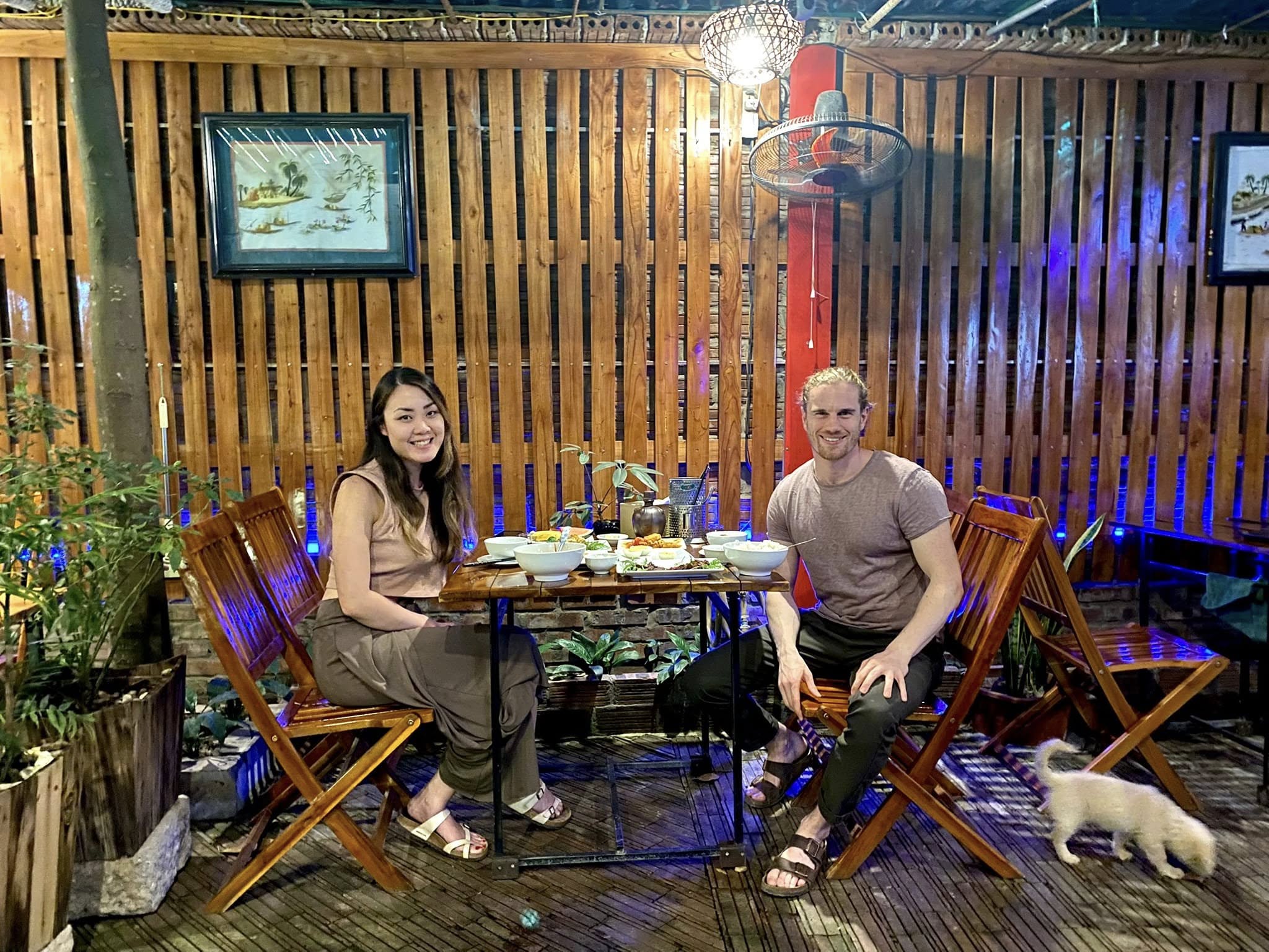
Not every food experience needs to be a class. A family kitchen dinner can be better if you want a relaxed evening, home-style dishes and conversation with a local host. This is especially useful if your daytime itinerary is already full with Trang An, Tam Coc, Mua Cave or countryside cycling.
A local family dinner is usually less about technique and more about atmosphere. You may learn how dishes are served, what local families cook for guests and how hosts adjust flavors for different travelers. It is a soft cultural experience for guests who feel shy about formal classes but still want to meet local people.
This option suits couples, older travelers, families and anyone who wants good food without standing in a kitchen for a long time. It can also be easier after a travel day because you do not need much energy.
The tradeoff is that you may do less hands-on cooking. If your main goal is to learn recipes, choose a farmhouse class instead. If your goal is a warm countryside evening, a Ninh Binh family dinner may be better.
Which cooking class is best for your group?
The right option depends on who is traveling and how much energy you want to spend.
Couples usually enjoy farmhouse cooking or farm-to-table meals because they feel personal without being too demanding. Solo travelers often like market-to-table experiences because the host interaction makes the activity social. Families should choose a comfortable farmhouse setting or a family dinner, especially if children are young or easily tired.
Food lovers should choose the option with the strongest ingredient context. That usually means market-to-table or farm-to-table, depending on whether you prefer a busy market or a quieter countryside setting. Slow travelers may prefer a farmhouse or family kitchen, where the meal becomes a pause in the day rather than another checkpoint.
Private groups should ask whether the menu, spice level, pickup time and dietary needs can be adjusted. This matters for vegetarians, guests with allergies, children and older travelers.
| Traveler type | Best option | Why |
|---|---|---|
| First-time visitor | Farmhouse cooking class | Balanced, local and hands-on |
| Food lover | Market-to-table | Strong ingredient context |
| Slow traveler | Farm-to-table meal | Relaxed countryside pace |
| Family with children | Farmhouse class or family dinner | Comfortable and flexible |
| Older traveler | Family dinner or farmhouse class | Less walking and easier timing |
| Private group | Farmhouse or farm-to-table | Easier to adapt menu and pace |
Vegetarian options, allergies and food preferences
Vegetarian options are often possible in Ninh Binh cooking classes, but you should request them clearly before booking. Vietnamese home cooking uses many plant-based ingredients, including tofu, herbs, vegetables, mushrooms, rice noodles and fresh fruit. However, fish sauce, meat stock, shrimp paste or small amounts of meat may appear in dishes that look vegetable-based.
If you are vegetarian, vegan, gluten-free, allergic to peanuts, allergic to seafood or avoiding pork, tell the host in advance. A good host can plan alternatives, but local kitchens need time to prepare the right ingredients.
Spice level is usually easier to adjust. Many Vietnamese dishes are not automatically very spicy, and chili can often be served on the side. Children and travelers who prefer mild food should still mention this early.
For serious allergies, be specific and cautious. Home kitchens may not always have the same separation systems as commercial kitchens. Ask direct questions about ingredients, sauces and cross-contact if needed.
Timing, pickup and how to fit it into your day
Most cooking classes work best as either a lunch experience or an early evening activity. A lunch class pairs well with a morning countryside walk, short cycle, Trang An boat ride or relaxed start from Tam Coc. An evening family dinner works well after a sightseeing day when you want something slower and more personal.
If your class includes a market visit, morning is usually better because markets are more active and ingredients are fresher. If the focus is a farmhouse or family dinner, afternoon or early evening can feel more relaxed.
Ask about pickup before booking. Some experiences include pickup from Tam Coc, Trang An, Ninh Binh city or nearby homestays, while others require a meeting point. This matters if you are traveling with children, arriving by train or staying outside the main tourist area.
Also consider weather. Cooking classes are one of the better local activities during rain because much of the experience happens indoors or under cover. In hot months, a cooking class can be more comfortable than a long midday cycling route, especially if the kitchen area is shaded and the schedule allows breaks.
What to wear and bring
Wear comfortable clothes that you do not mind getting a little smoky, oily or splashed. Closed shoes or secure sandals are better than loose footwear, especially if the class includes a market visit, garden walk or farm area.
Bring a small amount of cash, water, your phone or camera, and any written allergy or dietary notes if your needs are important. A reusable bag can be useful for market visits, though your host will usually manage ingredients. In rainy season, bring a light rain jacket or umbrella.
Avoid wearing overly formal clothes. These experiences are usually relaxed and practical. You may sit on simple chairs, move around a family kitchen, walk through a local market or help prepare food by hand.
Common mistakes to avoid
The first mistake is booking only by price. A cooking class is not just a meal; the quality depends on the host, setting, group size, menu flexibility and how much explanation is included.
The second mistake is not mentioning dietary needs early. Vegetarian, vegan, allergy and child-friendly adjustments are much easier when the host knows in advance.
The third mistake is choosing the wrong format. If you dislike busy markets, do not force yourself into a market-heavy class. If you want hands-on cooking, do not book a dinner-only experience and expect a full lesson. If you want a quiet evening, a farmhouse dinner may suit you better than a structured class.
Finally, leave enough time. A good local food experience should not feel rushed between two big sightseeing stops. Give yourself space to cook, eat, talk and enjoy the slower rhythm.
Related local food experiences in Ninh Binh
If you want to compare food, cycling, craft, family and countryside activities in one place, see our guide to authentic local experiences in Ninh Binh.
For the most balanced hands-on option, choose the Trang An farmhouse cooking class. If you want stronger ingredient context, the farm-to-table Ninh Binh experience is a better fit. If you prefer an easy evening with home-style dishes and local conversation, consider a Ninh Binh family dinner.
FAQ
Are cooking classes in Ninh Binh worth it?
Yes, cooking classes in Ninh Binh are worth it if you want a local experience beyond sightseeing. They give you time with a host, introduce countryside ingredients and help you understand home-style Vietnamese food in a more personal setting.
What do you cook in a Ninh Binh cooking class?
Menus vary by host and season, but you may prepare spring rolls, vegetables, tofu, grilled or stir-fried dishes, dipping sauces, soup, rice-based dishes or local family-style plates. Exact dishes should be confirmed before booking if you have strong preferences.
Are vegetarian options available?
Vegetarian options are often available, but you should request them in advance. Also mention whether you avoid fish sauce, shrimp paste, eggs or dairy, because these details affect how the host prepares sauces and side dishes.
Are cooking classes suitable for children?
Many farmhouse cooking classes are suitable for children if the pace is relaxed and the host knows the children are joining. Families should ask about safe tasks, spice level, meal timing and whether pickup is included.
Should I choose a market visit or farmhouse cooking class?
Choose a market visit if you want to learn about ingredients and daily shopping habits. Choose a farmhouse cooking class if you prefer a calmer countryside setting with more focus on preparing and eating the meal.
How long does a cooking class in Ninh Binh take?
Most cooking classes take around 2-4 hours, depending on whether they include pickup, a market visit, garden walk, hands-on cooking and a full meal. Dinner-only experiences may be shorter and more relaxed.