
 Tiếng Việt
Farm-to-table in Ninh Binh is less about fine dining and more about understanding where a local meal comes from. Around Trang An, Tam Coc and nearby villages, it can mean visiting a garden, seeing seasonal vegetables, learning how herbs are used, cooking with a local host, or sitting down to a meal shaped by what is available nearby. This guide explains what farm-to-table really means in the Ninh Binh countryside, how it differs from a normal restaurant or cooking class, and where travelers can try a food experience that feels connected to local life.
Quick Answer Farm-to-table in Ninh Binh usually means a local food experience where ingredients, hosts and countryside context are part of the meal. It may include a market visit, garden walk, farmhouse cooking, simple preparation or a family-style meal. Choose it if you want more than eating at a restaurant, but do not expect a polished chef-led class with exact recipes and formal plating.
| Experience style | Best for | Main focus |
|---|---|---|
| Farm-to-table | Slow travelers, food lovers, couples | Ingredients, countryside context, local meal |
| Farmhouse cooking class | Hands-on travelers, families | Cooking steps with a local host |
| Market-to-table | Curious food travelers | Shopping, ingredients and preparation |
| Family dinner | Easy evening plans | Home-style food and conversation |
What farm-to-table means in Ninh Binh
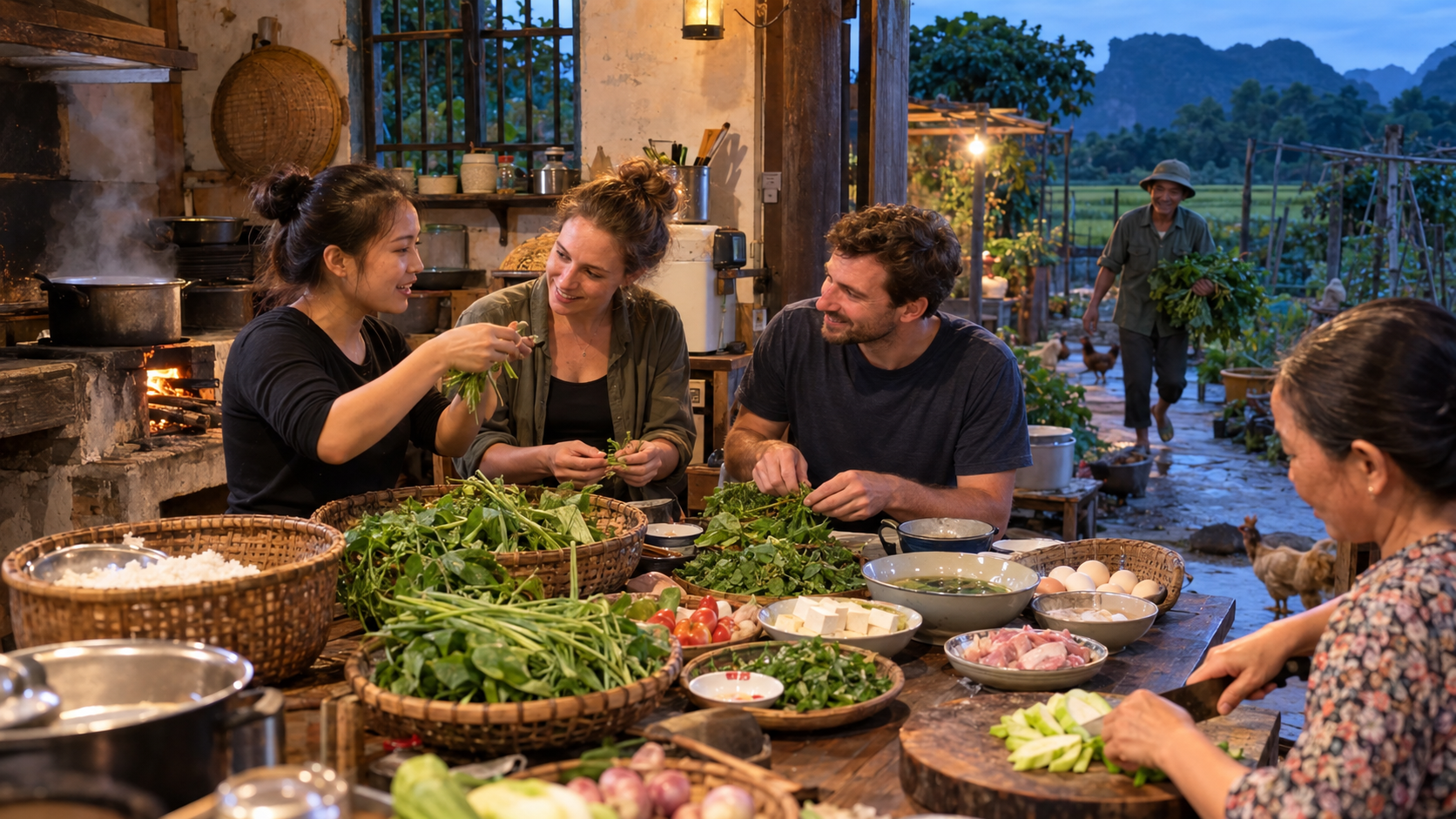
In Ninh Binh, farm-to-table is usually a practical countryside idea rather than a restaurant label. It means the meal is connected to local ingredients, local hosts and the rhythms of rural life. You may see vegetables in a garden, learn which herbs are used in family cooking, help prepare simple dishes, or hear why a host chooses one ingredient over another.
The experience can look different depending on season and location. In some places, it may include a market visit before cooking. In others, it may focus on a farmhouse kitchen, a garden, a family meal or dishes built around local produce. The important part is that the food is not separated from place. You understand more about how people shop, grow, cook and eat in the Ninh Binh countryside.
It is also not always 100 percent from one farm. Travelers should be careful with unrealistic expectations. A good farm-to-table experience may combine garden ingredients, local market produce and family recipes. That is normal. The value is transparency, context and connection, not a marketing promise that every item came from one field.
How it differs from a restaurant meal
A restaurant meal is usually about choosing dishes from a menu and eating at your own table. A farm-to-table experience is more interactive. You are invited into the story behind the meal: what is fresh, what is seasonal, what the host cooks at home, and how local ingredients are prepared.
The setting also changes the feeling. Instead of a busy tourist restaurant in Tam Coc or Ninh Binh city, you may be in a village home, farmhouse, garden kitchen or countryside dining space. The meal becomes part of the travel experience, not just a stop between attractions.
That does not mean farm-to-table is automatically better than a restaurant. If you are tired, short on time or want complete menu control, a restaurant may be easier. Farm-to-table is better when you want to slow down, ask questions and understand food through local hosting.
It is also more personal, which means communication matters. If you have allergies, vegetarian needs or strong preferences, tell the host before the experience. Local kitchens can often adapt, but they need time to prepare.
Farm-to-table vs cooking class vs family dinner
These experiences overlap, but they are not the same. A farm-to-table experience focuses on the relationship between ingredients, place and meal. A cooking class focuses more on learning how to prepare dishes. A family dinner focuses on sharing home-style food and conversation.
For many travelers, the best choice depends on energy level. If you want to cook with your hands, choose a farmhouse cooking class. If you want ingredient context and a slower countryside meal, choose farm-to-table. If you want an easy evening after sightseeing, choose a family dinner.
| Question | Best match |
|---|---|
| I want to cook several dishes | Farmhouse cooking class |
| I want to learn where ingredients come from | Farm-to-table |
| I want to visit a market | Market-to-table |
| I want a relaxed evening meal | Family dinner |
| I am traveling with children | Farmhouse cooking or family dinner |
For a wider comparison, read our guide to the best cooking classes in Ninh Binh. It explains farmhouse, market and family kitchen options in more detail.
What to expect during a farm-to-table experience
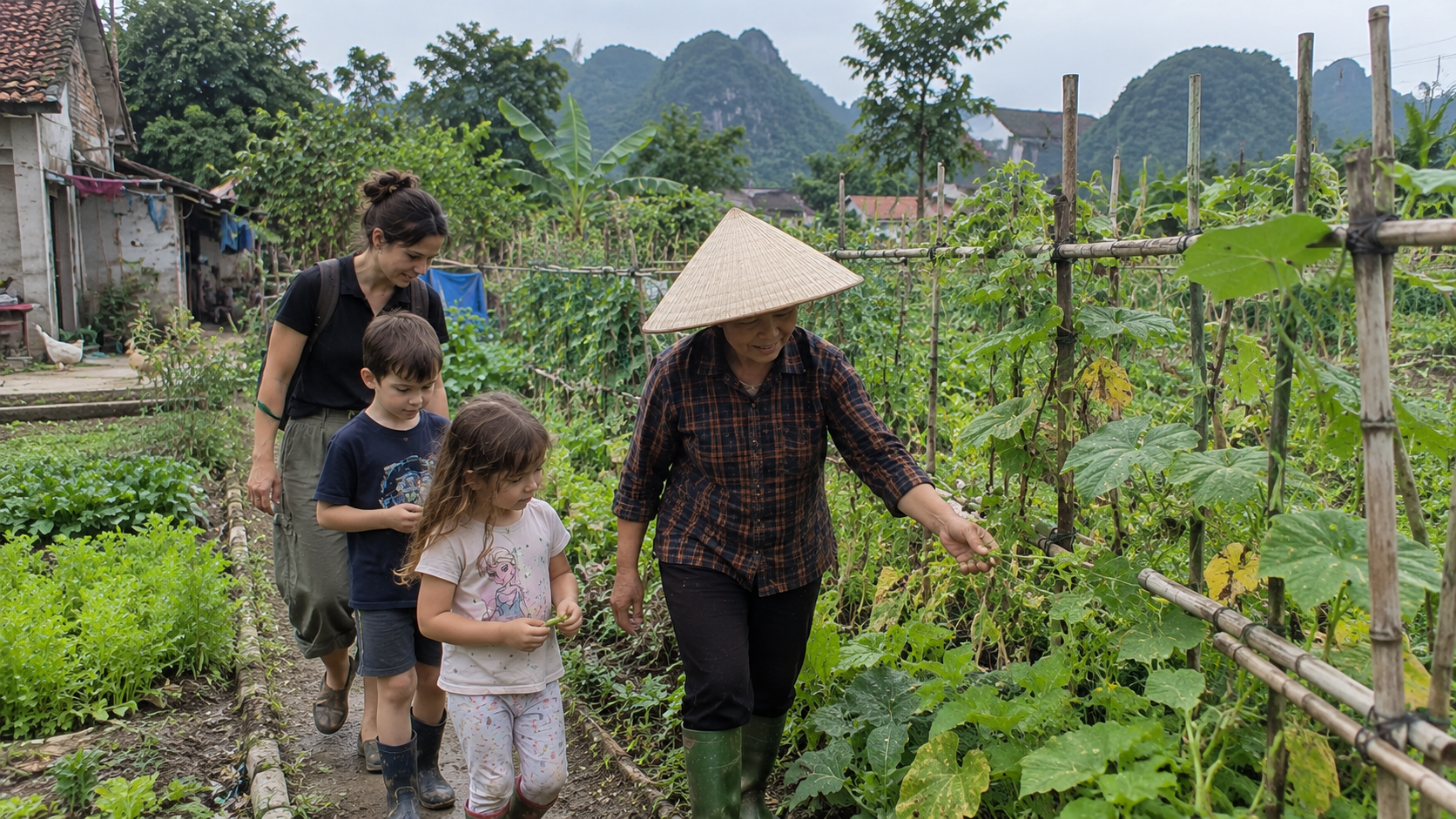
A typical farm-to-table experience may begin with pickup from Tam Coc, Trang An, Ninh Binh city or a nearby homestay, depending on the provider. You may meet a local host, walk through a small garden or farm area, visit a market, or go straight into a farmhouse kitchen.
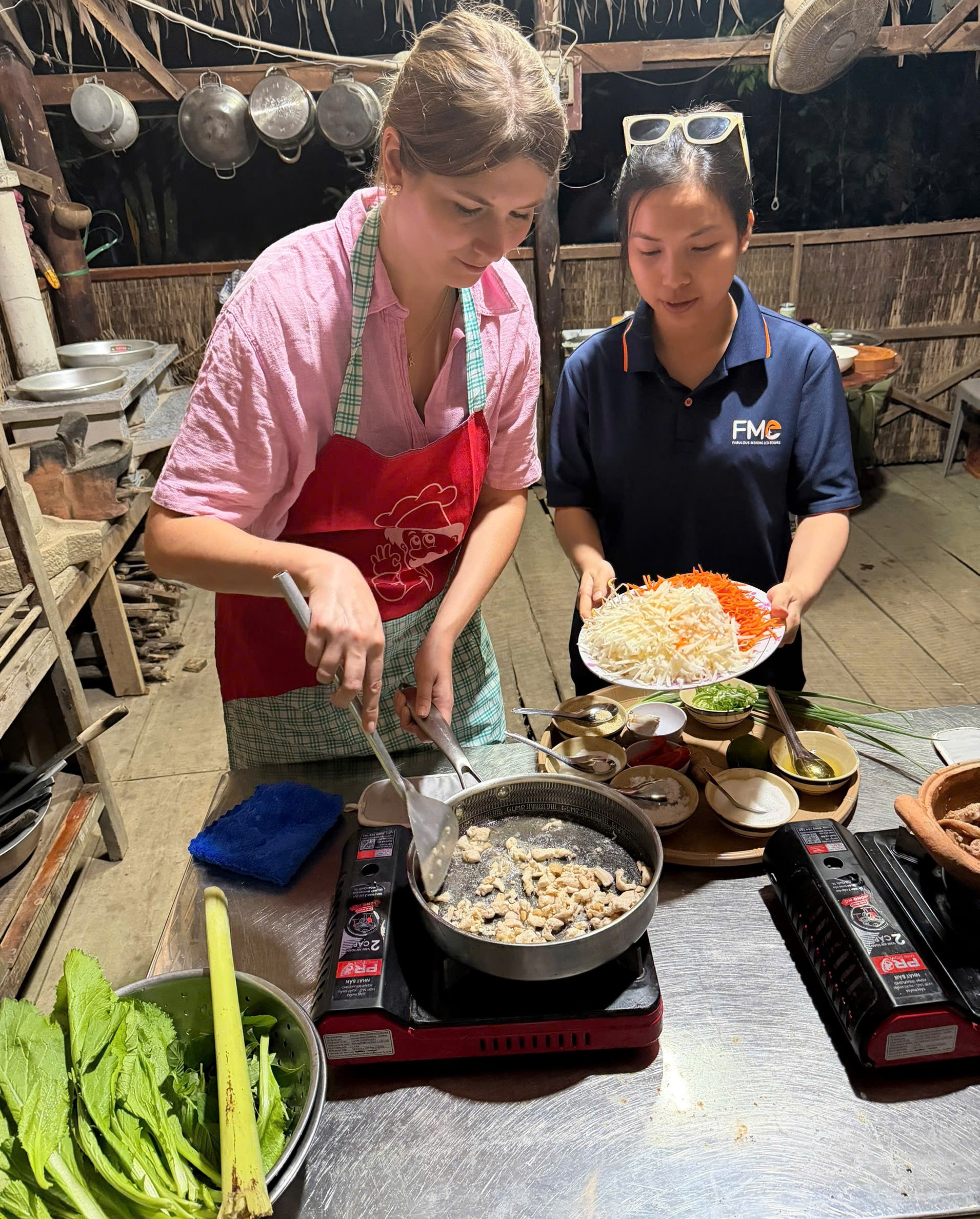
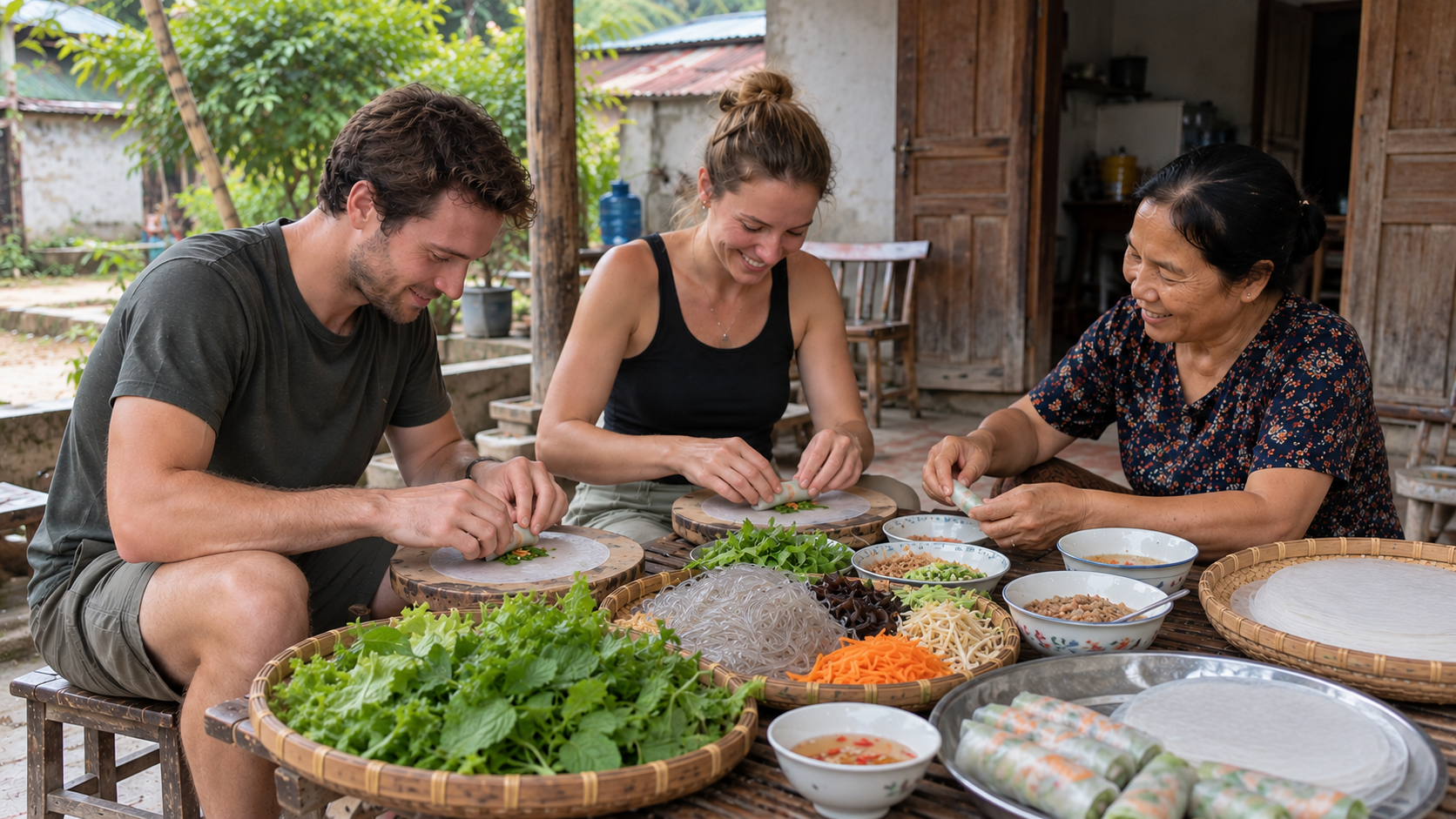
The host may introduce vegetables, herbs, rice, sauces or seasonal ingredients. You might help wash herbs, roll spring rolls, prepare vegetables, make dipping sauce, stir-fry a dish, or simply observe and ask questions. Some experiences are very hands-on; others are more meal-focused with light participation.
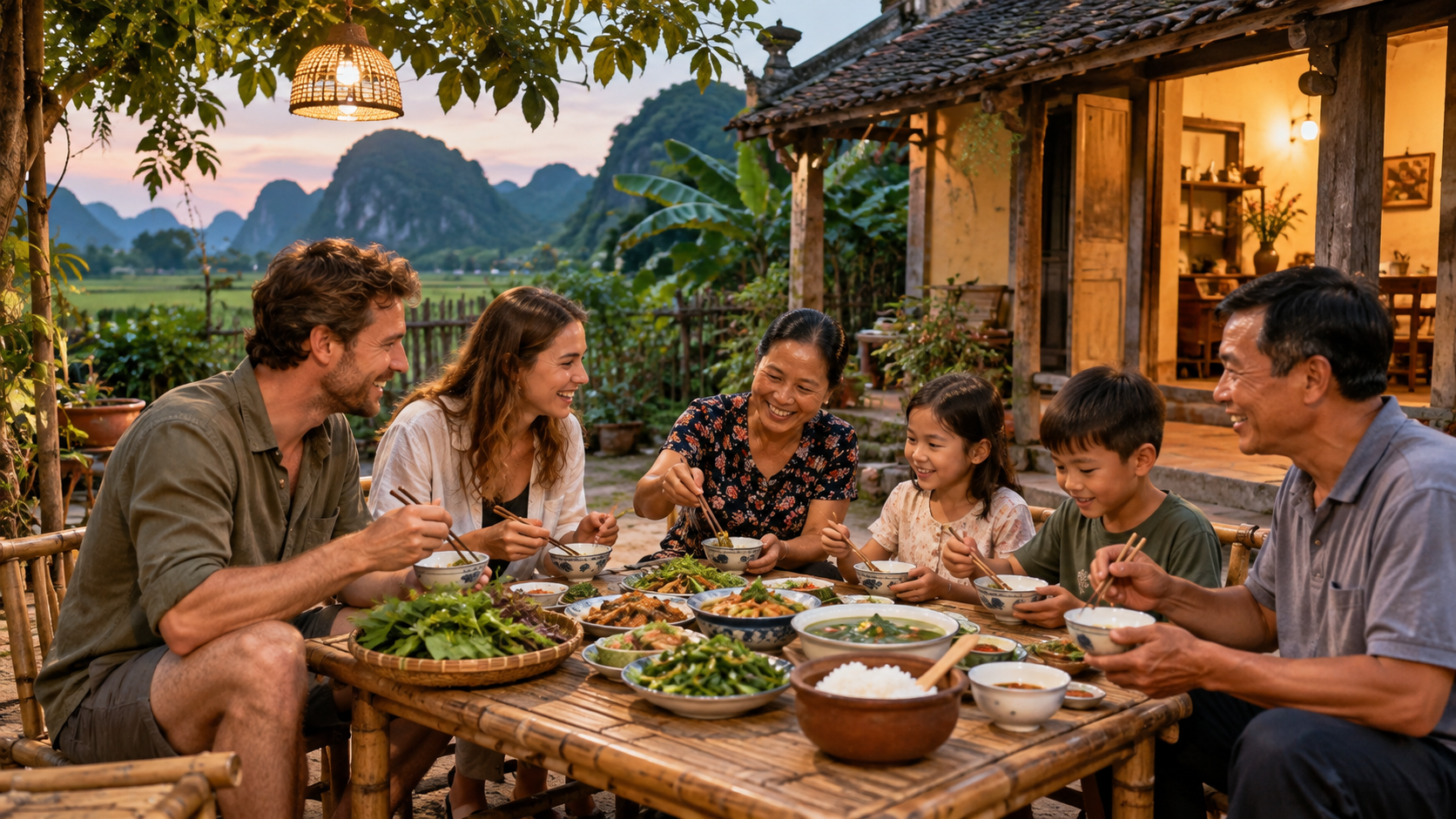
The meal is usually home-style rather than restaurant-style. Expect shared dishes, simple plating, local flavors and a slower pace. You may sit with the host or group, talk about the countryside, and learn how dishes are adapted for guests.
Do not expect a scripted performance. The best moments are often small and practical: seeing how herbs are selected, learning why a sauce tastes balanced, understanding how a family adjusts dishes for children, or noticing how seasonal vegetables shape the menu.
Where to try farm-to-table in Ninh Binh
The most natural areas for farm-to-table experiences are around Trang An, Tam Coc and nearby countryside villages. These places are close to the main travel routes but still connected to gardens, rice fields, local homes and rural kitchens.
Trang An works well for farmhouse and family-based food experiences because it has quiet rural surroundings and easy access from popular sightseeing areas. Tam Coc is convenient for travelers staying in homestays and guesthouses, especially if you want to combine food with cycling or a countryside route.
If you want the clearest farm-to-table angle, choose a hosted experience rather than only a restaurant that uses the phrase on a menu. Look for signs that the experience includes a local host, ingredient explanation, garden or market context, and a meal prepared in a countryside setting.
For a dedicated option, see our farm-to-table Ninh Binh experience. If you prefer more hands-on cooking in a rural home setting, the Trang An farmhouse cooking class may be a better fit.
Who this experience is best for
Farm-to-table is best for travelers who enjoy slow, local experiences. Food lovers will appreciate the ingredient context. Couples often like the quieter pace. Families can enjoy it if the experience includes simple tasks for children and enough flexibility. Vegetarians may find it rewarding because many Vietnamese home dishes use vegetables, herbs, tofu and rice-based ingredients.
It may not suit travelers who want a fast meal, full menu control or a formal chef lesson. It also may not suit guests who are uncomfortable with rustic kitchens, changing menus or family-style meals. The experience is local and practical, not polished fine dining.
Private groups should ask whether the menu can be adjusted. This is useful for children, older travelers, vegetarians, vegans, guests avoiding pork or seafood, and anyone with allergies. A good host can often adapt, but only if they know in advance.
If your group mainly wants a relaxed meal rather than a food-learning experience, a Ninh Binh family dinner may be simpler.
Vegetarian options, allergies and children
Vegetarian options are often possible, but you should request them before booking. Do not assume that vegetable dishes are fully vegetarian, because fish sauce, shrimp paste, meat stock or small amounts of pork may appear in Vietnamese home cooking.
For vegan, gluten-free, peanut allergy, seafood allergy or pork-free requests, be specific. Write the request clearly and repeat it when you arrive. Serious allergies need extra caution because local home kitchens may not have the same separation systems as commercial kitchens.
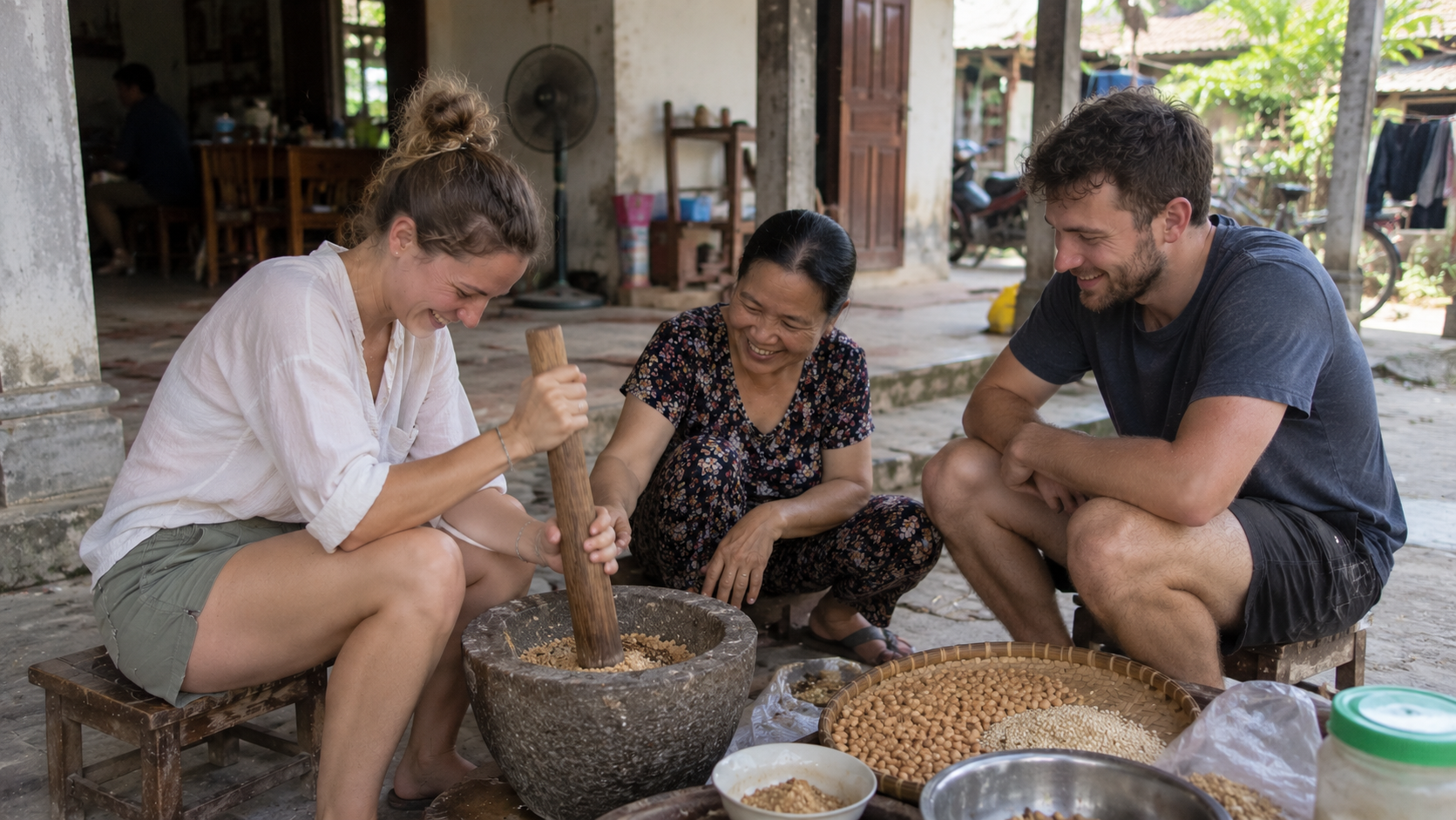
Children can join many farm-to-table or farmhouse experiences, especially when tasks are simple and the pace is relaxed. Younger children may enjoy washing vegetables, picking herbs or helping with easy steps. Older children may enjoy understanding the garden, market or cooking process.
For families, ask about timing, toilets, shade, pickup and spice level. A shorter, flexible experience is usually better than a long meal that starts too late.
Best time and practical tips
Farm-to-table experiences can work in most seasons, but the feeling changes through the year. In warmer months, midday outdoor activities can feel hot, so a shaded farmhouse or lunch experience is more comfortable than a long walk. During rainy season, cooking and family meals can be good backup activities because they do not depend on perfect weather.
Morning is best if your experience includes a market visit. Lunch works well if you want a food-focused break after sightseeing. Dinner is better if the experience is closer to a family meal than a cooking class.
Wear comfortable clothes and shoes that can handle a garden, market or kitchen setting. Bring a small amount of cash, water, a phone or camera, and written notes for allergies or dietary needs. If you are visiting after a temple or countryside tour, keep your schedule realistic so the meal does not feel rushed.
Ask what is included before booking: pickup area, meal type, market visit, hands-on cooking, vegetarian options, group size and approximate duration. These details shape the experience more than the label “farm-to-table.”
Related food and local experiences
If you want to compare food, cooking, family and countryside activities, see our guide to Ninh Binh local experiences.
For the strongest ingredient-focused option, choose the farm-to-table Ninh Binh experience. For more hands-on cooking, try the Trang An farmhouse cooking class. For an easy evening meal with local hosting, consider a Ninh Binh family dinner.
FAQ
What does farm-to-table mean in Ninh Binh?
Farm-to-table in Ninh Binh means a food experience connected to local ingredients, countryside hosts and the meal’s setting. It may include a garden, market visit, farmhouse cooking or family-style meal.
Is farm-to-table the same as a cooking class?
Not always. A cooking class focuses on preparing dishes, while farm-to-table focuses on where ingredients come from and how they connect to the meal. Some experiences include both.
Are vegetarian farm-to-table options available?
Vegetarian options are often possible if requested in advance. Be clear about whether you avoid fish sauce, shrimp paste, eggs, dairy, meat stock or other ingredients.
Is farm-to-table suitable for children?
Yes, many farm-to-table or farmhouse experiences can suit children when the pace is flexible. Ask about simple tasks, spice level, toilets, shade and pickup before booking.
How long does a farm-to-table experience take?
Most experiences take around 2-4 hours, depending on pickup, market visits, garden walks, cooking and meal time. A dinner-only experience may be shorter.
What should I ask before booking?
Ask what is included, whether there is a market or garden visit, how hands-on the cooking is, whether pickup is included, how large the group is, and whether dietary needs can be handled.